Introduction
With more people spending long hours working at desks, the question of health has moved beyond diet and exercise to something much closer: the desk itself. Whether you work in an office or from home, your desk setup can significantly affect posture, energy levels, and long-term health.
Standing desks have surged in popularity as an alternative to traditional sitting desks, promising better posture and reduced health risks. But are standing desks actually healthier, or is the traditional desk still a viable option?
This article provides a clear, science-backed comparison of standing desks vs traditional desks to help you determine which is healthier for long-term work and daily productivity.
What Is a Traditional Desk?
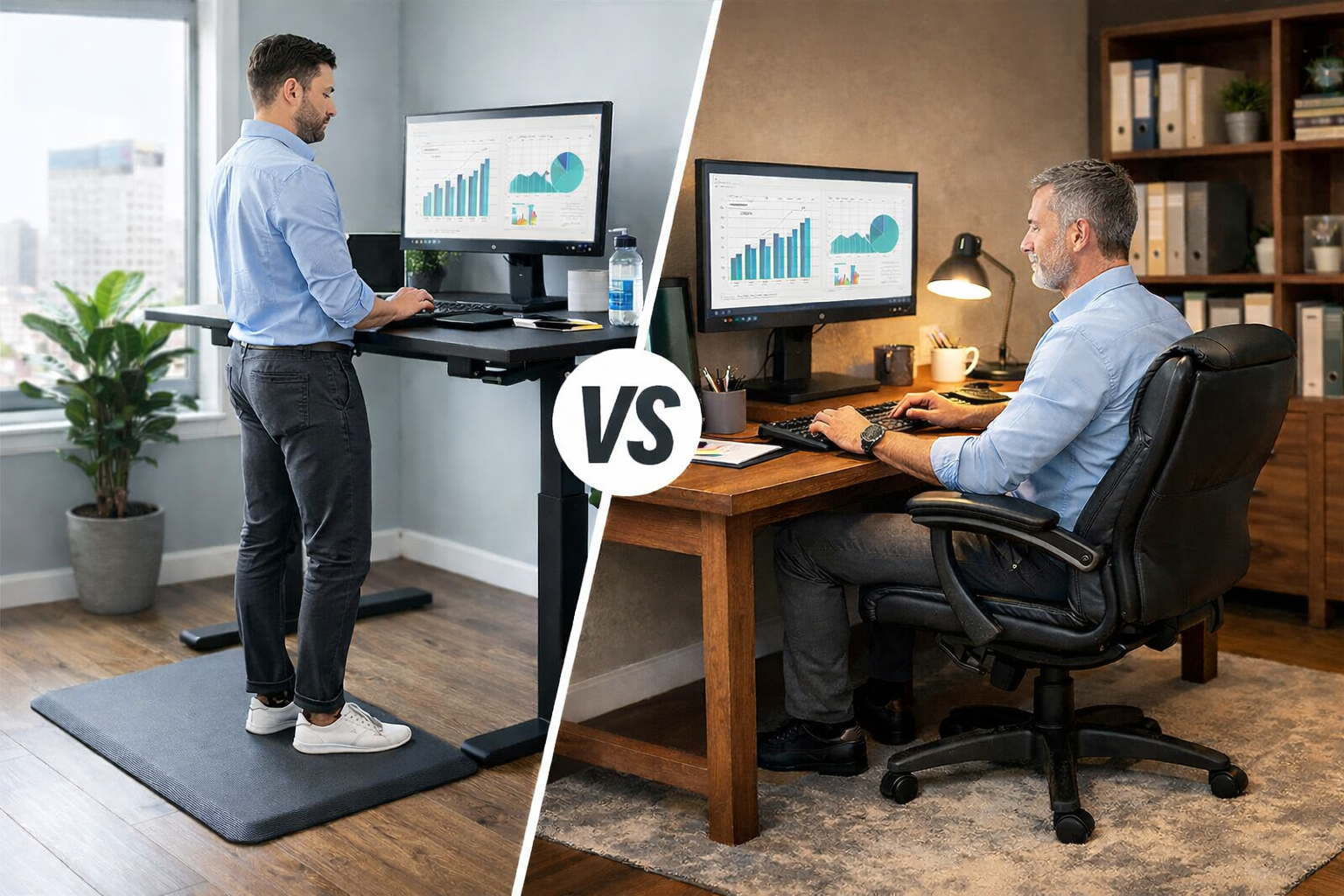
A traditional desk is designed for seated work and is typically paired with an office chair. This setup has been the standard in workplaces for decades and remains common in homes, offices, and schools.
Traditional desks allow for:
- Extended seated work
- Stable arm and wrist positioning
- Less physical strain during precision tasks
However, prolonged sitting without proper ergonomics or movement can negatively affect overall health.
What Is a Standing Desk?
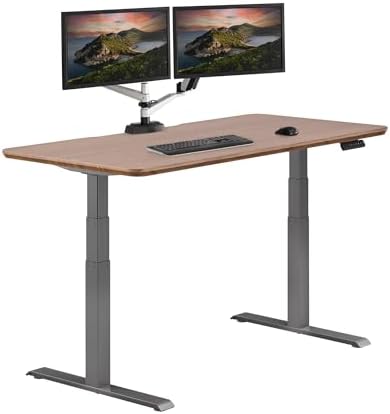
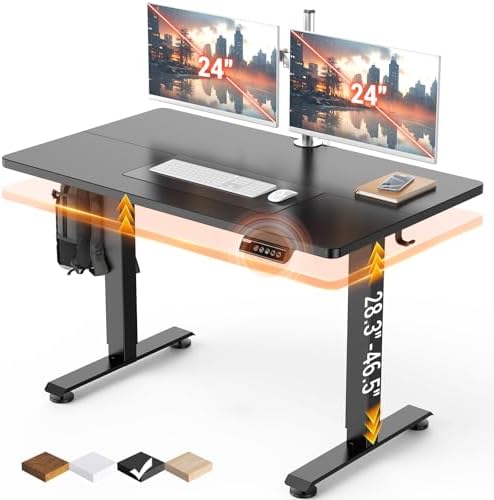
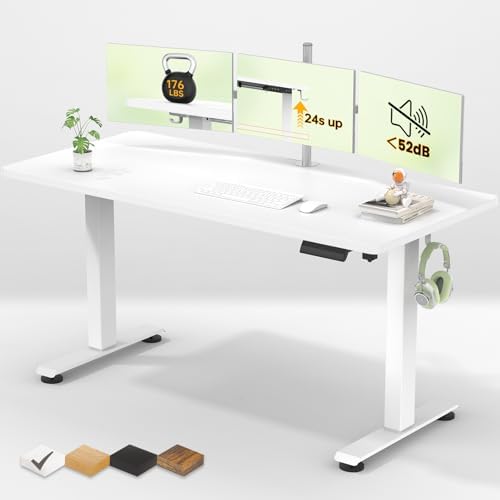
A standing desk allows users to work while standing upright. Some models are fixed-height, while others are adjustable, allowing users to alternate between sitting and standing throughout the day.
Standing desks gained popularity as awareness grew around the risks of prolonged sitting and sedentary behavior. They are often promoted as a way to increase movement, improve posture, and boost energy.
Health Effects of Using a Traditional Desk
Impact on Posture and Spine
Sitting for long periods can encourage slouching, forward head posture, and rounded shoulders. Without proper ergonomic alignment, pressure builds in the lower spine and neck, increasing discomfort over time.
Sitting and Back Pain
Prolonged sitting compresses spinal discs and weakens core muscles. This often leads to lower back pain, stiffness, and reduced flexibility, especially when breaks are infrequent.
Sedentary Behavior and Long-Term Health Risks
Extended sitting reduces calorie burn and slows circulation. Over time, this sedentary behavior is associated with weight gain, reduced cardiovascular health, and lower metabolic efficiency.
Health Effects of Using a Standing Desk
Posture Improvements
Standing desks encourage a more neutral spine position when used correctly. Keeping the monitor at eye level and elbows at a natural angle can reduce strain on the neck and shoulders.
Standing and Calorie Burn
Standing burns more calories than sitting and promotes small movements such as shifting weight and adjusting posture. These micro-movements contribute to improved circulation and muscle engagement.
Potential Downsides of Standing Too Long
Standing for excessive periods can cause leg fatigue, foot discomfort, and joint stress. Without breaks or proper support, standing all day can be just as problematic as sitting all day.
Standing Desk vs Traditional Desk: Direct Health Comparison
- Posture: Standing desks promote upright posture, while traditional desks require strong ergonomic discipline.
- Back Pain: Standing desks may reduce lower back pressure, but poor setup can still cause pain.
- Energy Levels: Standing often improves alertness and reduces afternoon fatigue.
- Long-Term Health: Movement and position changes matter more than desk type alone.
The healthiest option depends on how the desk is used, not just which one is chosen.
Productivity and Mental Health Considerations
Standing desks can increase focus and reduce sluggishness, particularly during long workdays. Many users report improved mood and mental clarity when alternating between sitting and standing.
Traditional desks may support longer periods of concentrated work, especially for tasks requiring fine motor control or extended typing.
What Do Health Experts Recommend?
Most health professionals agree that neither sitting nor standing all day is ideal. The healthiest approach is a sit–stand balance, alternating positions throughout the day while incorporating regular movement.
A commonly recommended approach is:
- Sit for 30–60 minutes
- Stand for 15–30 minutes
- Move, stretch, or walk frequently
Who Should Choose a Standing Desk?
A standing desk may be a good choice if you:
- Work long hours at a computer
- Experience back or posture-related discomfort
- Want to increase daily movement
- Prefer adjustable, flexible workstations
Who Might Be Better with a Traditional Desk?
A traditional desk may be better if you:
- Have joint, circulation, or balance concerns
- Perform tasks requiring extended seated focus
- Have limited space or budget
- Already use an ergonomic chair and move frequently
How to Use Any Desk More Healthily
Ergonomic Setup Tips
- Keep your monitor at eye level
- Position elbows at a 90-degree angle
- Maintain neutral wrist alignment
- Use supportive chairs or anti-fatigue mats
Movement and Break Strategies
- Take short movement breaks every hour
- Stretch the neck, shoulders, and hips
- Walk during phone calls
- Avoid staying in one position too long
Standing Desk vs Traditional Desk: Final Verdict
So, which is healthier for long-term work?
A standing desk is not automatically healthier than a traditional desk. The healthiest choice is the one that encourages movement, good posture, and balance throughout the day.
For most people, an adjustable desk that allows alternating between sitting and standing offers the greatest health benefits. Regardless of desk type, regular movement and proper ergonomics matter most.
Frequently Asked Questions
Are standing desks healthier than sitting all day?
Yes, standing desks can be healthier when they reduce prolonged sitting and encourage movement, but standing all day is not recommended.
How long should you stand at a standing desk?
Most people benefit from standing 15–30 minutes at a time, alternating with seated work.
Can a standing desk reduce back pain?
A standing desk may help reduce back pain if properly adjusted and used in combination with movement and breaks.
Is alternating between sitting and standing best?
Yes, alternating positions throughout the day is widely considered the healthiest approach.
Affiliate Disclosure: As an Amazon Associate, I earn from qualifying purchases. This post contains affiliate links, which means if you click and make a purchase, I may receive a small commission at no extra cost to you. I only recommend products I personally use or believe add real value. Thank you for supporting The Right Man Mindset.