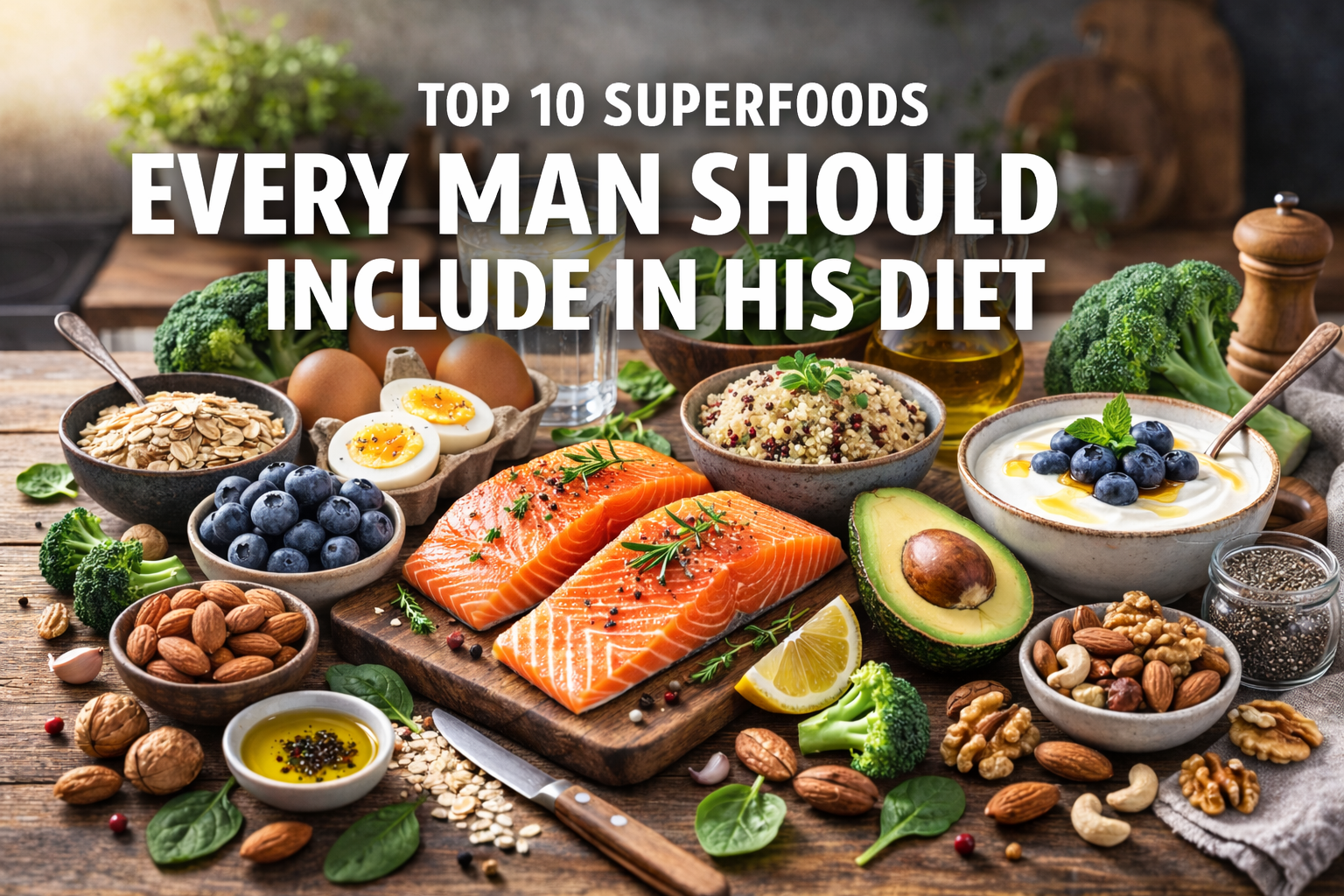
Eating a nutrient-dense diet isn’t just about weight or appearance—it’s about supporting long-term health, muscle growth, and energy. While all whole foods provide benefits, some foods are especially powerful due to their vitamins, minerals, antioxidants, and healthy fats. These are commonly called superfoods.
This guide highlights the top 10 superfoods for men, explains why they matter, and gives practical tips for including them in your diet.
Medical Disclaimer
This article is for educational purposes only and is not medical advice. Always consult a qualified healthcare provider, dietitian, or physician before making major changes to your diet or supplement routine.
Why Superfoods Are Important for Men
Men have unique nutritional needs:
- Muscle maintenance: Protein, magnesium, and zinc support strength and recovery.
- Heart health: Healthy fats, fiber, and antioxidants protect cardiovascular health.
- Hormonal balance: Vitamins and minerals like vitamin D, magnesium, and selenium support testosterone and metabolic function.
- Brain & energy support: B vitamins, omega-3 fatty acids, and antioxidants help mental performance and energy levels.
Including superfoods regularly ensures your diet is nutrient-rich rather than empty calories.
Top 10 Superfoods for Men
1. Salmon (or Fatty Fish)
Rich in omega-3 fatty acids, salmon supports heart health, reduces inflammation, and may enhance testosterone levels. It’s also an excellent protein source.
- Serving tip: Grill, bake, or add to salads.
- Harvard T.H. Chan School of Public Health on Omega-3s
2. Spinach
Packed with magnesium, iron, and antioxidants, spinach helps energy production, supports muscle function, and protects against oxidative stress.
- Serving tip: Add fresh to smoothies, salads, or sauté as a side.
- Harvard Nutrition Source – Leafy Greens
3. Blueberries
These berries are high in antioxidants and flavonoids, supporting brain health, reducing inflammation, and improving cardiovascular function.
- Serving tip: Eat fresh, frozen, or in Greek yogurt.
- NIH on Antioxidants in Berries
4. Greek Yogurt
A high-protein, probiotic-rich dairy food that supports gut health, muscle recovery, and satiety.
- Serving tip: Combine with fruit or nuts for breakfast.
- Harvard Health – Yogurt Benefits
5. Quinoa
A complete plant protein with fiber, magnesium, and B vitamins. Great for energy and building lean muscle.
- Serving tip: Use as a side dish or base for bowls.
- Whole Grains Council – Quinoa
6. Nuts (Almonds, Walnuts, Brazil Nuts)
Nuts provide healthy fats, protein, and micronutrients like selenium (supports testosterone) and vitamin E (antioxidant).
- Serving tip: Snack on a handful daily.
- Harvard Nutrition Source – Nuts
7. Eggs
Eggs are an affordable complete protein and are rich in choline, vitamin D, and lutein—important for brain, muscle, and eye health.
- Serving tip: Boil, scramble, or make an omelet.
- Harvard Health – Eggs and Heart Health
8. Broccoli
A cruciferous vegetable rich in fiber, vitamin C, and sulforaphane, which may reduce oxidative stress and support prostate health.
- Serving tip: Steam, roast, or add to stir-fries.
- NIH on Cruciferous Vegetables
9. Avocado
Provides healthy monounsaturated fats, potassium, and fiber. Supports heart health, hormonal balance, and satiety.
- Serving tip: Slice onto toast, salads, or make guacamole.
- Harvard T.H. Chan – Avocados
10. Oats
A fiber-rich whole grain that stabilizes blood sugar, supports heart health, and provides slow-release energy.
- Serving tip: Cook for breakfast, overnight oats, or add to smoothies.
- Whole Grains Council – Oats
How to Include Superfoods in a Daily Diet
- Breakfast: Greek yogurt with blueberries, oats, and nuts.
- Lunch: Quinoa salad with spinach, avocado, and grilled salmon.
- Snack: A handful of mixed nuts or a smoothie with eggs (pasteurized) and spinach.
- Dinner: Roasted broccoli and fatty fish or lean meats.
Consistency is key—focus on variety to cover micronutrient needs.
Summary
Incorporating these 10 superfoods supports:
- Muscle and strength
- Heart and brain health
- Hormonal balance and energy
- Anti-inflammatory and antioxidant protection
They’re simple, accessible, and powerful when included in a balanced diet.
References / Trusted Sources:
- Harvard T.H. Chan School of Public Health – Omega-3 Fats
- NIH – Antioxidants in Berries
- Harvard Health – Yogurt Benefits
- Whole Grains Council – Quinoa
- Harvard Nutrition Source – Nuts
- Harvard Health – Eggs
- NIH – Cruciferous Vegetables
- Harvard – Avocados
- Whole Grains Council – Oats
Affiliate Disclosure: As an Amazon Associate, I earn from qualifying purchases. This post contains affiliate links, which means if you click and make a purchase, I may receive a small commission at no extra cost to you. I only recommend products I personally use or believe add real value. Thank you for supporting The Right Man Mindset.