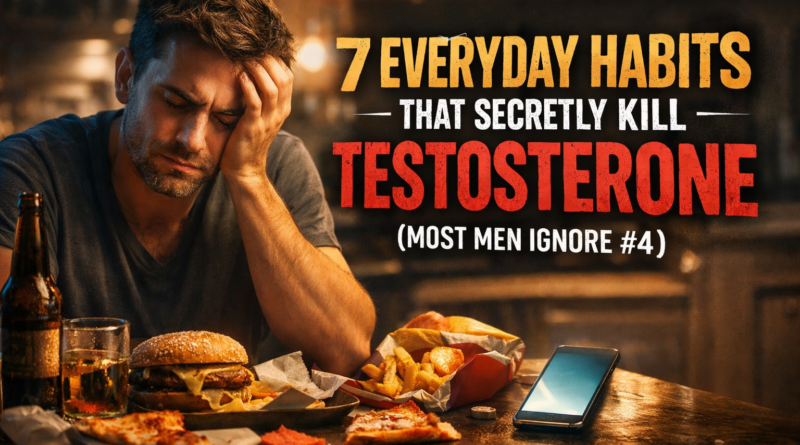
Testosterone Killers in Your Everyday Routine (Most Men Ignore #4)
Testosterone is the cornerstone hormone behind male energy, muscle growth, motivation, libido, mental sharpness, and long-term health. Yet many men unknowingly sabotage their testosterone every single day — not through major health problems, but through ordinary habits, modern conveniences, and lifestyle blind spots. Avoid Testosterone Killers!
Low testosterone rarely happens overnight. It’s usually the result of small, repeated daily choices.
In this guide, you’ll learn the most common testosterone killers in your everyday routine, why they matter scientifically, and what to do instead.
(This article is for educational purposes only and is not medical advice. Always consult a qualified healthcare professional.)
Why Testosterone Levels Are Falling in Modern Men
ver the past several decades, multiple studies have observed a steady decline in average testosterone levels among men — even when’ age and health are accounted for. Researchers believe this drop isn’t caused by one single factor, but by a combination of modern lifestyle changes that affect the body’s hormonal balance.
Today’s environment is dramatically different from what the male body evolved to handle.
Men now sleep less, move less, sit more, eat more ultra-processed food, experience constant digital stimulation, and live under chronic low-level stress. Each of these factors alone can slightly reduce testosterone production. Combined, they create the perfect storm for long-term hormonal decline.
For example:
- Screen exposure late at night disrupts natural sleep cycles, reducing nighttime hormone production
- Highly processed diets often lack the micronutrients needed for healthy testosterone synthesis
- Sedentary desk work reduces metabolic health and increases fat gain, which can convert testosterone into estrogen
- Constant phone notifications and information overload keep stress hormones elevated throughout the day
Unlike sudden medical conditions, these modern lifestyle pressures lower testosterone slowly and quietly over years. That’s why many men don’t notice the change until symptoms like fatigue, reduced motivation, slower muscle gain, or decreased drive start interfering with daily life.
The important thing to understand is this:
In many cases, testosterone decline is not inevitable — it’s environmental.
When men improve sleep, movement, nutrition, stress control, and daily habits, hormone levels often improve alongside overall health, energy, and physical performance.
That means the goal isn’t just “boosting testosterone.”
The real goal is removing the daily habits that suppress it.
And that’s exactly what the rest of this guide will help you do.
Why Testosterone Matters More Than Ever
Medical research shows testosterone influences:
- Muscle mass and strength
- Body fat distribution
- Red blood cell production
- Sex drive and fertility
- Mood and motivation
- Bone density
- Cognitive function
Trusted medical overviews:
• Cleveland Clinic — https://my.clevelandclinic.org/health/articles/9117-testosterone
• Endocrine Society — https://www.endocrine.org/patient-engagement/endocrine-library/hypogonadism
1. Chronic Sleep Deprivation (The Silent Hormone Destroyer)
Sleep isn’t just recovery — it’s hormone production time.
Most daily testosterone release occurs during deep REM sleep.
A well-known study from the University of Chicago found that sleeping only five hours per night for one week significantly reduced testosterone levels in healthy young men.
Why this happens
- Cortisol rises
- Testosterone synthesis drops
- Growth hormone production decreases
- Insulin resistance worsens
Modern habits that wreck sleep
- Scrolling your phone in bed
- Late-night streaming or gaming
- Drinking alcohol before sleep
- Irregular sleep schedules
What to do instead
- Aim for 7–9 hours nightly
- Keep consistent sleep times
- Avoid screens 60 minutes before bed
- Keep your bedroom cool and dark
Sleep may be the single most powerful natural testosterone booster available.
2. Excess Body Fat (Especially Belly Fat)
Fat tissue contains an enzyme called aromatase, which converts testosterone into estrogen.
The more abdominal fat you carry, the more testosterone gets converted away.
Medical explanation from the Mayo Clinic:
https://www.mayoclinic.org/healthy-lifestyle/sexual-health/in-depth/low-testosterone/art-20045728
Warning signs
- Waist size increasing yearly
- Energy declining despite adequate sleep
- Strength dropping despite workouts
What helps most
- Resistance training
- Daily walking
- Moderate calorie deficit
- High protein intake
Even losing 10–15 pounds can significantly improve hormone markers.
3. Chronic Psychological Stress
Your body cannot prioritize survival and reproduction simultaneously.
When stress stays high long term:
- Cortisol rises chronically
- Testosterone production gets suppressed
- Recovery declines
- Sleep quality worsens
Health overview from the American Psychological Association:
https://www.apa.org/topics/stress/health
Modern stress sources men underestimate
- Constant work notifications
- Financial anxiety
- Relationship tension
- Information overload
- Feeling permanently behind
Quick testosterone-friendly fixes
- Lift weights regularly
- Spend time outdoors
- Reduce social media intake
- Work in focused time blocks
Stress management is biological optimization, not just mental wellness.
4. Ultra-Processed Food Consumption (The BIG One Most Men Ignore)
Highly processed foods often contain:
- Excess refined sugar
- Industrial oils
- Artificial additives
- Very low micronutrient density
Research overview from the Harvard T.H. Chan School of Public Health:
https://www.hsph.harvard.edu/nutritionsource/processed-foods/
Why processed foods hurt testosterone
Testosterone production depends heavily on:
- Zinc
- Magnesium
- Vitamin D
- Healthy fats
- Balanced cholesterol
Simple swaps
Instead of sugary cereal → eggs and fruit
Instead of fast food → chicken, rice, vegetables
Instead of snack bars → nuts or Greek yogurt
Your hormone profile reflects your grocery cart.
5. Alcohol Overconsumption
Frequent heavy drinking interferes with testosterone production by:
- Damaging testosterone-producing cells
- Raising estrogen conversion
- Disrupting sleep cycles
- Increasing fat storage
Research information from the National Institute on Alcohol Abuse and Alcoholism:
https://www.niaaa.nih.gov/
Testosterone-safer approach
- Limit drinking to social occasions
- Avoid binge drinking
- Avoid alcohol before sleep
Even reducing weekly intake can noticeably improve energy.
6. Sedentary Lifestyle (Sitting All Day)
Physical inactivity contributes to:
- Metabolic dysfunction
- Weight gain
- Hormonal decline
Public health guidance from the Centers for Disease Control and Prevention:
https://www.cdc.gov/physicalactivity/index.html
Minimum effective strategy
- 8–10k daily steps
- 3 weekly strength sessions
- Short daily mobility movement
Consistency beats intensity.
7. Endocrine-Disrupting Chemicals in Everyday Products
Certain chemicals can mimic estrogen inside the body.
These include:
- BPA plastics
- Some pesticides
- Synthetic fragrances
- Low-quality food packaging
Global overview from the World Health Organization:
https://www.who.int/news-room/questions-and-answers/item/chemical-safety-endocrine-disruptors
Easy reduction strategies
- Avoid microwaving plastic containers
- Use glass or stainless steel bottles
- Wash produce thoroughly
- Choose fragrance-free grooming products
You don’t need paranoia — just awareness.
Signs Your Testosterone May Be Dropping
Watch for patterns, not single symptoms:
- Persistent fatigue
- Lower sex drive
- Difficulty gaining muscle
- Increasing belly fat
- Low motivation
- Brain fog
- Poor recovery
If multiple symptoms persist, consult a licensed medical professional for testing.
The Simple Testosterone Protection Checklist
If you do only these consistently, you protect most hormonal health:
- Sleep 7–9 hours
- Lift weights three times weekly
- Walk daily
- Eat mostly whole foods
- Limit alcohol
- Reduce chronic stress
No expensive supplements required to start.
Medical Disclaimer
This article is for informational and educational purposes only and does not constitute medical advice. It is not intended to diagnose, treat, cure, or prevent any disease. Always consult a qualified healthcare provider before making changes to your diet, exercise routine, supplements, or medical treatment.
Affiliate Disclosure: As an Amazon Associate, I earn from qualifying purchases. This post contains affiliate links, which means if you click and make a purchase, I may receive a small commission at no extra cost to you. I only recommend products I personally use or believe add real value. Thank you for supporting The Right Man Mindset.